
Trimming & Pruning
Correct, structural cuts that keep your trees healthy, safe and beautifully shaped — the way a certified arborist prunes.
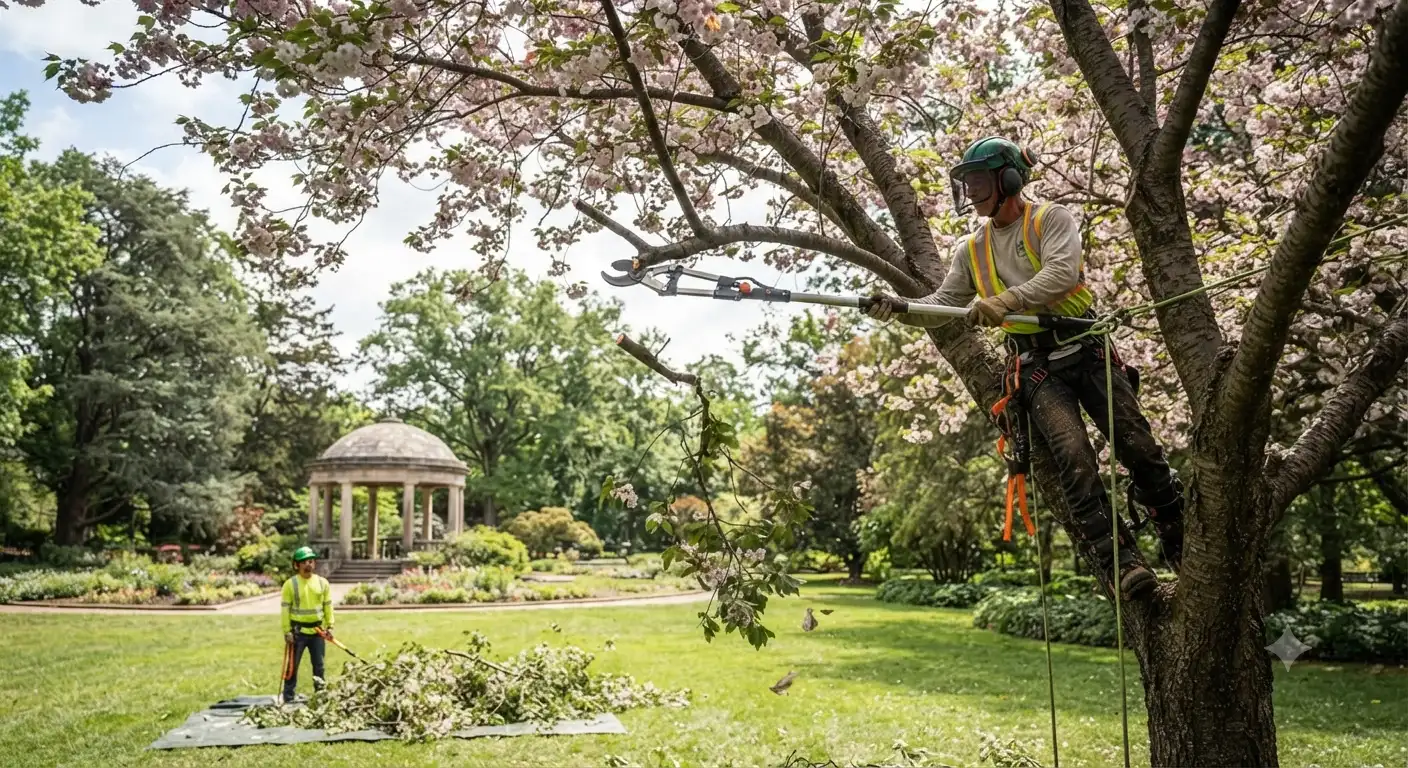
Trimming & Pruning
Good pruning is invisible. Done right, a tree looks natural, breathes and lights better, and carries less risk — without ever looking “cut”. Done wrong, it invites decay and weak, dangerous regrowth.
We prune to proper arboricultural standards: cutting back to the branch collar, never topping, and removing only what the tree can afford to lose. The result is a stronger structure, more light and air, and a canopy that stays healthy for years.
- Cut to the branch collar
- We never top trees
- Deadwood & clearance
- Shaped, not butchered
Everything, handled properly.
Crown thinning
Selective removal of inner growth to let light and wind pass — easing weight and stress.
Crown raising
Lifting the lower canopy for clearance over paths, drives, lawns and rooflines.
Deadwood & reduction
Removing dead, diseased or crossing limbs and gently reducing over-extended branches.
From first call to last sweep.
Assess the tree
We read the species, structure and health, and agree exactly what to cut — and what to leave.
Set the goals
Clearance, light, shape or safety — we prune to a clear objective, not a blanket haircut.
Prune to standard
Clean cuts at the collar, no stubs, no topping — removing only what’s healthy to remove.
Clear & finish
Prunings chipped and cleared, the ground raked, and the finished shape checked with you.
What it costs, and why.
Pruning is priced by tree size, how much work it needs and access. These are typical ranges for a single tree in our area.
Tree size
A small ornamental is quick; a mature shade tree is a bigger climb.
Amount of work
A light tidy costs less than a full thin, raise and reduction.
Access
Open lawns are simple; tight or overhanging spots take longer.
Number of trees
We discount multiple trees or ongoing seasonal maintenance.
Small tree
Ornamentals, fruit trees and young trees up to ~25 ft.
- Shape, thin or clear
- Often same-day
- Prunings chipped
Medium tree
Mature maples, oaks and similar shade trees.
- Full thin / raise / reduce
- Deadwood removed
- Clean-up included
Large tree
Big, old specimens or heavy structural pruning.
- Multi-hour skilled climb
- Structural / crown work
- Health plan on request
Ranges include clean-up and are typical for a single tree. Best pruned in dormancy (late winter) for most species — ask us about timing. Every job gets a fixed written quote.
Get an exact quoteThe right kit, used the right way.
Hand saws & secateurs
Sharp, sanitised hand tools for precise, clean cuts that heal fast.
Pole & top-handle saws
Reach into the canopy and make controlled cuts without over-climbing.
Rope-access climbing
Certified systems let us move through the crown and reach every branch safely.
Sanitised blades
Tools cleaned between trees so we never move disease from one to the next.
Safety first, always
- ISA-certified pruning to ANSI A300 standards — no topping, no lion-tailing.
- Never remove more than ~25% of a live canopy in one season.
- Climbers on inspected rope systems; ground crew clears drop zones.
- Blades sanitised between trees to stop disease spread.
- Full liability and workers’ comp cover on every job.
Jobs we’ve completed.
A small sample of recent jobs across Buffalo and Western New York — every one cleared, cleaned and signed off.
-
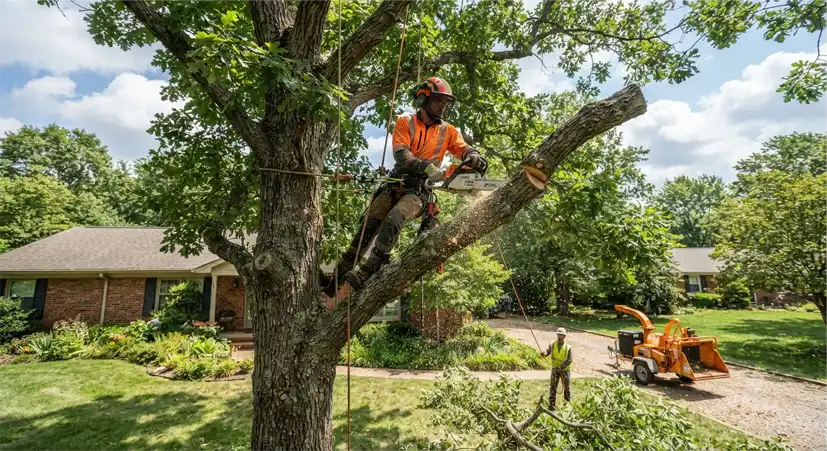
Crown thin on a mature oak Williamsville · light & air -
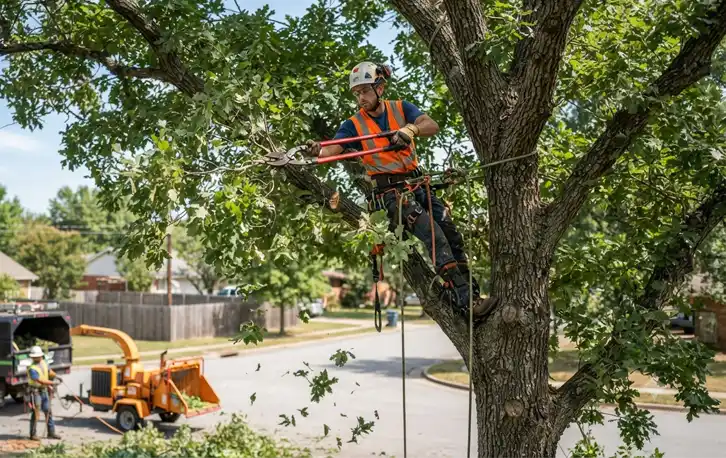
Canopy raise for driveway Kenmore · clearance prune -
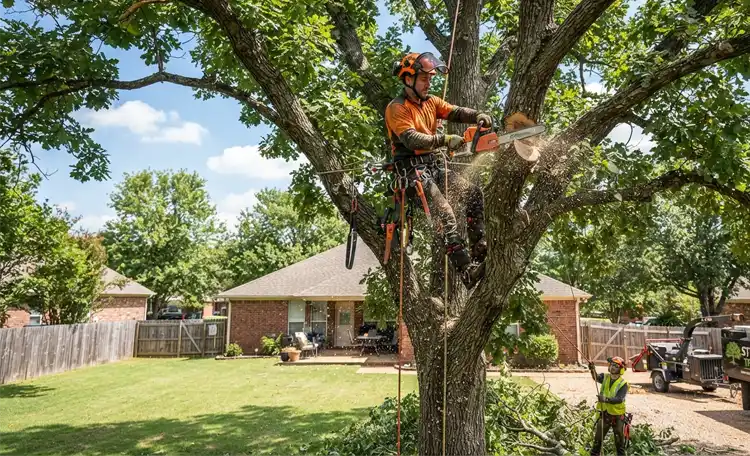
Orchard restoration prune East Aurora · fruit trees
Why homeowners pick us for this.
Real arborists
Certified pruning that improves the tree — not a landscaper with a hedge trimmer.
We never top
Topping ruins trees and creates hazards. We reduce and shape the right way.
Right time, right cut
We advise on the best season for your species so the tree bounces back strong.
Tidy every time
All prunings chipped and cleared — you’d never know a crew had been.
Questions, answered.
Still unsure about something? A real person is one call away.
When is the best time to prune?
For most species, late winter dormancy is ideal — the tree heals fast in spring. Dead, damaged or dangerous limbs can be removed any time. We’ll advise on your specific trees.
What’s the difference between trimming and topping?
Trimming (pruning) makes selective cuts back to a branch or collar and keeps the tree healthy. Topping hacks the whole crown off — it’s harmful, creates weak regrowth and hazards, and we never do it.
How much can you safely remove?
Generally no more than about a quarter of a living canopy in one season. Taking more stresses the tree. If a tree needs a big reduction, we may stage it over two visits.
Will pruning make my tree healthier?
Done correctly, yes — removing deadwood and crossing limbs, improving light and airflow, and correcting structure all reduce disease and failure risk.
Do you prune fruit trees?
Yes — we prune fruit and ornamental trees for shape, health and yield, timed to the species.
Need trimming & pruning?
Book a free assessment. We’ll take a look, talk you through the options, and leave you with a clear written quote.